Stop Killing Your Fleet: Why That 10,000-Mile Oil Change Is A Death Sentence For Your Patrol Car
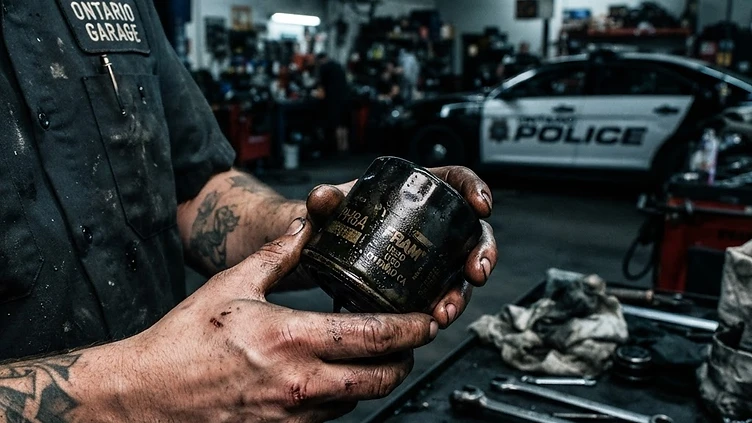
Think you can stretch your Ford fleet's oil changes to the factory limit? Think again. In the stop-and-go heat of the Inland Empire, your patrol vehicle is working harder than you think, and synthetic oil is the only thing standing between you and a catastrophic engine failure.
Ontario, CA — If you are running a fleet of Ford Crown Victorias, Police Interceptors, or any high-idle workhorse in the Inland Empire, you are likely staring at a maintenance schedule that looks good on paper but spells disaster on the asphalt. We see it every week at the shop: a cruiser rolls in with a ticking engine, the owner swearing they followed the 'extended' service intervals found in the manual. The reality? The manual was written for a commuter car in a temperate climate, not a patrol unit idling for hours in 105-degree Ontario heat. ## The Myth of the Long-Life Interval When Ford suggests oil change intervals of 7,500 to 10,000 miles, they are talking about 'normal' driving conditions. Let’s be honest: there is nothing normal about the life of a fleet vehicle. Between the constant stop-and-go traffic on the I-10, the heavy electrical loads from light bars and computers, and the brutal heat that bakes the Inland Empire, your engine oil is being pushed to its absolute limit. Synthetic oil is a massive upgrade over conventional, offering better thermal stability and resistance to viscosity breakdown, but it is not a magic shield that lasts forever. When you push synthetic oil to the absolute maximum mileage, you are inviting carbon deposits and sludge to build up in the tight tolerances of your engine. ## Why Your Patrol Car Needs Special Attention Fleet vehicles face 'severe-duty' conditions by default. This isn't just a suggestion; it is a mechanical reality. When you factor in the high-idle hours—where the engine is running but the odometer isn't moving—you are effectively doubling the wear on your oil without the mileage to show for it. Here is why you need to tighten up your schedule: * Fuel Dilution: Frequent idling and short trips allow unburnt fuel to seep past piston rings, thinning your oil and stripping away its protective properties. * Thermal Stress: High ambient temperatures in Southern California cause oil to oxidize faster, leading to sludge that clogs oil passages. * Component Longevity: Clean oil is the cheapest insurance policy you can buy for your timing chains, bearings, and turbochargers. As one veteran Mission Boulevard technician put it, 'I’ve seen guys try to squeeze 10k out of a synthetic change on a unit that spends half its life idling at a construction site, and they’re just buying themselves a new engine by the time they hit 150k miles.' ## The Synthetic Advantage While synthetic oil is superior in every metric—flowing better in the cold and holding up under extreme heat—it still needs to be changed. For our local fleet operators, we recommend a strict 5,000-mile interval. It might seem like you are spending more upfront, but compared to the cost of a long-block replacement or a vehicle being sidelined for a week, it is a drop in the bucket. Don't let a 'recommended' interval turn into a repair bill that kills your budget. If your fleet is due for service, stop by the shop or visit our website to get on the schedule before that ticking sound becomes a permanent part of your patrol. Book your next service at our website and let us keep your fleet running as hard as you do. This story is brought to you by Crown Vic Guys — Ontario's specialists for Crown Victoria, Police Interceptor, and Ford fleet service.
Crown Vic Guys
Ontario's specialists for Crown Victoria, Police Interceptor, and Ford fleet service. Real wrenches. Real hands.